Window Installers in Austin, TX
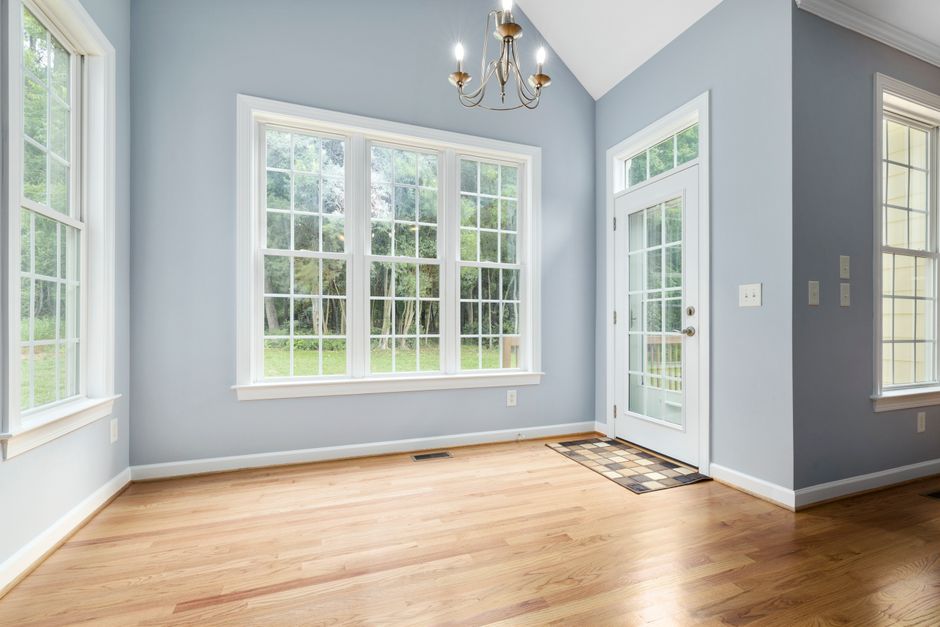
Practical notes on window installers in Austin, TX: measuring openings, brick, stucco and siding walls, older homes, tempered and egress glass, and the final walk-through.
What We Cover
- Brick, Stucco and Siding Around a New Window What changes at the window opening when an Austin house is clad in brick, stucco or lap siding.
- Egress Windows in Bedrooms and Basements What an egress window is, how installers judge whether an opening can serve as one, and what changes in the wall.
- Lead Paint and Wavy Openings in Older Austin Homes What installers watch for in older Austin bungalows: lead paint on sashes and openings that are out of plumb.
- Measuring an Opening Before Ordering Windows in Austin How installers measure width, height and square on an Austin opening before a replacement window is ordered.
- Texas Summer Heat and Installing Windows How heat, sun and the occasional cold snap affect the timing and method of window installs around Austin.
- When a Window Has to Be Tempered Glass The situations where installers specify tempered glass in a house, as general practice rather than code advice.
Window Installers in Austin, TX
A window crew in Austin, TX starts the day with a tape, a level and a window schedule. Every opening in a house gets its own line: three widths, three heights, the operation, the glass, and anything odd about the wall. The work across Travis County is mostly replacement, one opening at a time, so the care taken in the first hour decides how the last one looks.
Walls decide the method
Austin houses are clad in brick, stucco and lap siding, and sometimes all three. Brick calls for patience around the brick mould, stucco for scoring before anything is pulled, and siding for lifting boards and taping the fin. A bungalow in Hyde Park or Clarksville adds layers of old paint, and a house in Mueller or Bouldin Creek may have newer framing that behaves differently. Installers read the wall first and pick the method after.
Heat, light and glass
Summer sun off the Colorado River valley and the hills west of town bakes the west wall by late afternoon. Sealant has a working range, vinyl moves, and glass choices matter: tempered near doors and tubs, a low e coating for the long afternoons, and an egress opening wherever a bedroom needs one. A trip to Barton Springs Pool or the top of Mount Bonnell shows how much light this city gets, and windows are chosen with that in mind.
The end of the job
A job ends with a final walk-through. Sashes slide, locks catch, trim lines are straight, and the exterior sealant has no gaps. Anything wrong is fixed before the crew leaves, not after, and the leftover scraps and packing leave with them.
Guides
The pages here cover how an opening is measured, what brick, stucco and siding change, what older homes with lead paint need, when glass must be tempered, how egress windows work, and how Texas heat shapes the schedule of an install.
Latest Guides

Install Day in Austin: The Order of Work From Tear-Out to Walk-Through
2026-10-06
Install day looks simple from the sidewalk: a truck, a few people, windows coming out and windows going in. Inside the house it follows a fixed order, and the order exists because each step protects the next one. Skipping ahead is how a leak ends up behind a finished wall. For homeowners in Austin, knowing the sequence makes the day easier to follow and the final walk-through easier to judge.
What happens before the first window comes out?
The crew starts by confirming the window schedule against the boxes. Each unit has a number, and each number matches an opening. A unit that was built for the kitchen does not go in the hall, and checking this at the start saves a lot of grief. The installer also walks the house, notes which rooms hold furniture near the windows, and decides the order. Bedrooms with tempered or egress units are often set early, since those are the ones with the least room for error.
Floors and furniture are covered. Curtains and blinds come down, and anything on the sill is moved. In older houses around Hyde Park and Travis Heights, the crew also sets up for lead safe work, with plastic over the floor and a plan for dust control, since the paint on the old interior stop may be many layers deep.
Which tasks come in what order?
The sequence below is the general order used on a typical replacement. A given house may shuffle a step or two, but the logic holds.
| Step | What the installer does | Why it comes here |
|---|---|---|
| 1. Check the schedule | Match each unit to its opening and confirm the glass type | A wrong unit is easier to catch in the box than in the wall |
| 2. Protect the room | Cover floors, move furniture, hang plastic | Dust and debris are controlled before demolition starts |
| 3. Remove the old unit | Cut caulk, take out sashes and stops, pull the frame | The opening has to be clear before anything is measured again |
| 4. Inspect the opening | Check the sill, jambs and header for rot or damage | Repairs are far easier with the window out |
| 5. Flash the opening | Tape the sill, then the jambs, then the head | Each layer sheds water over the one below |
| 6. Set and fasten | Seat the unit, shim, check plumb and level, fasten | Fastening locks in the position, so it is checked first |
| 7. Insulate and seal | Low expansion foam at the gap, sealant at the exterior | The unit must be fixed before the gap is filled |
| 8. Trim and clean | Interior stop and casing go back, debris leaves | Trim hides the gap and cannot be fitted early |
| 9. Walk-through | Operate every sash, check locks, look for gaps | Problems are fixed while the crew is still on site |
Why does the opening get inspected with the window out?
With the old unit gone, the opening can finally be seen. The installer looks at the sill for soft spots, at the jambs for cracks, and at the header for sagging. Brick houses may show a gap behind the brick mould. Stucco houses may show a crack running to the corner. Wood framing that looked fine from inside may carry old water stains, and a stain that is dry is a different thing from one that is still active.
This is the moment where a job can change. A small repair, such as a spliced sill or a new piece of jamb, is done on the spot. A larger problem, such as rot in the framing, stops the work until it is dealt with, because covering it with a new window only hides it for a season.
How is the new unit set in the opening?
The unit is lifted into the pocket, pressed against the stop and checked with a level on the sill and a plumb line on the jambs. Shims go at the corners and at the lock points, never in the middle of a span, because a shim in the wrong place bows the frame. A casement or slider that opens easily with the shims in place is a good sign. A double hung sash that binds is checked again before fastening, since one extra turn of a screw can twist the frame.
Vinyl window frames flex with heat, and installers know to leave a small allowance on a hot day. A composite frame or a fiberglass window frame is stiffer and holds its shape, while an aluminum window frame conducts heat and cold, which is why the thermal break matters. A wood window frame takes screws well and is the easiest to adjust.
What is foam and sealant doing at the end?
Low expansion foam goes into the gap between the frame and the wall, in thin beads rather than a thick fill. Too much foam pushes the jamb inward and jams the sash. Sealant goes on the exterior joint between the frame and the wall surface, and on brick or stucco it is tooled smooth so water runs off. In the Texas heat, installers watch the temperature range on the label, because sealant applied on a scorching west wall may skin over before it bonds.
A beginner reading the job might assume that the foam and sealant are cosmetic. They are the weather barrier. The flashing sheds water, the sealant keeps it out of the joint, and the foam stops air from moving through the gap.
What does the walk-through cover?
The final walk-through is the check that the earlier steps were done correctly. The installer opens and closes every sash in the house, with the homeowner watching. Locks should catch cleanly. Screens should seat in their tracks. Glass should be free of marks, and any tempered stamp should be where it belongs. Insulated glass should show no fog or smudges between the panes.
Outside, the installer walks the exterior and looks along each sealant line for gaps. Inside, a hand across the frame on a sunny afternoon should feel no draft. Trim lines should be straight, nail holes filled, and the floor swept. Any item that fails gets fixed before the crew leaves.
How do weather and timing change the day?
Austin weather rewrites schedules. A hot afternoon pushes west walls to the end of the day. A front rolling in over the Texas Hill Country means openings are closed up early, and a rainy morning moves exterior work to another day. Installers prefer not to leave an opening exposed overnight, so a job is planned so every hole is closed by evening, even if that means working on fewer windows.
A day in a house near Zilker Park or Bouldin Creek runs differently from a day in a larger home in Tarrytown simply because of the number of openings and the access. A two story house takes longer than a ranch, and a window above a stairwell needs staging. These details are planned from the schedule, not discovered halfway through.
Install day goes best when each step is finished before the next begins. A crew that follows the order is easy to watch, and a final walk-through that checks every sash is the last proof that it was done right.
Repair or Replace: How an Installer Judges an Old Window in Austin
2026-10-06
An old window in an Austin house rarely fails all at once. It sticks in July, rattles in a March front, fogs between the panes on the west side, and for years nobody does anything about it. At some point someone asks whether it can be repaired or whether the whole unit has to come out. Installers answer that question the same way every time: they test the parts, one at a time, and let the results decide.
What does an installer look at first?
The first look is at the frame, not the glass. A frame is the part that cannot be cheaply fixed, and every other decision depends on it. The installer presses a screwdriver tip into the sill, the lower jamb and the corners of a wood frame. Firm wood that resists the tip is sound. Wood that gives way like a damp sponge is not, and a frame with soft sections in more than one place is usually past repair.
Next comes the operation. A double hung sash should slide with two fingers and stay where it is left. A casement should crank without grinding and close tight against the weatherstrip. A slider should roll without lifting. Each of these has a part that wears, and some of those parts, such as balances, rollers and operators, are replaceable. When the part is available and the frame is sound, repair is a sensible answer.
Why does the glass tell part of the story?
Fog or a milky film between two panes of an insulated glass unit means the seal around the edge has failed and moist air has gotten in. That is a seal failure, and it cannot be cleaned out. The glass itself can be replaced in some frames, which takes less labour than replacing the entire window, but only if the frame is in good shape and the unit is a standard size.
A single pane in an older wood sash is a different case. Single glass loses and gains heat quickly, and on a south or west wall in Austin the room shows it by mid afternoon. Some homeowners accept that in a sunroom or a pantry and spend the effort on the windows that matter more, such as the bedrooms. An installer may suggest replacing only the openings that face the afternoon sun and leaving the shaded ones alone.
How do older neighborhoods change the decision?
Houses in Hyde Park, Clarksville and Tarrytown were built with wood windows that suit the style of the house, and many still carry original trim. Replacing a unit can change the look of the front of a home, so installers weigh that with the homeowner. A wood window that can be restored keeps the character of the street. A window beyond repair gets a replacement matched to the original sightlines, such as the same grille pattern or the same number of lites.
Newer construction in Mueller or along the Colorado River corridor leans on vinyl window frames, fiberglass window frames and aluminum window frames. Those do not rot, but they do fail in other ways: sealant lets go, tracks warp in heat, hardware loosens. Repair in those frames is usually limited to hardware and glass, since a bent or cracked frame is not fixable.
What does lead paint add to the question?
In an older house, scraping and sanding a painted sash to restore it releases dust. Paint from decades ago may contain lead, so installers treat any older sash as suspect before work starts. Wet methods, plastic sheeting, a HEPA vacuum and sealed disposal are the usual routine. Restoration takes more hours around the sash, and that is a real factor when choosing between a repair and a replacement unit that goes in without disturbing the old paint on the trim.
When is replacement clearly the better call?
Several signs point the same way. A rotted frame in more than one place. A sash that has been painted shut so many times it will not move. Multiple panes with failed seals. Hardware that is no longer made. An opening so far out of square that every repair leaves it binding again. When two or three of these show up together, installers stop discussing repair, because the next problem is already on its way.
Replacement also becomes the better call when comfort is the reason for the call. A bedroom that heats up every afternoon, a living room with a picture window that fades the floor, a kitchen window with a draft felt from across the room: these are problems of glass and sealing, and new insulated glass with a low e coating and a warm edge spacer addresses them directly. The u factor and shgc on the label give a way to compare units, and lower numbers mean less heat moving through.
What does a repair actually involve?
A repair visit usually runs through a short list. Sash cords or balances are replaced. Weatherstripping is renewed. A cracked pane is swapped. A latch or crank is changed. A sill with a small soft spot is cut back and filled with epoxy, then primed and painted. None of this is complicated, but it takes a careful hand, and the aim is to leave a window that works as the maker intended.
A repair also has a limit. A fix that holds for a year is a fine result on an old window. A fix that needs a return visit every season is a sign that the frame is telling the truth and the installer should listen.
Questions homeowners ask
Can one window be replaced without touching the others?
Yes. A replacement unit is built for a single opening, and the rest of the house stays as it was. The one caution is appearance: if the new unit has a different frame color or grille pattern, it will stand out from the front of the house, so installers match the style as closely as the frame material allows.
Is a stuck window a sign of a bad frame?
Not always. Paint on the track or stop is the most common cause, and a careful scoring of the paint line frees many windows. A sash that sticks again within weeks, or one that visibly sits crooked in the frame, points to movement in the wall and needs a closer look at the opening.
Does a fogged window need to be replaced right away?
No. A fogged unit has lost its seal, but the glass still works as a barrier. It will not insulate as well as it did, and the fog tends to spread, so the glass can be replaced when convenient. A fogged window that also has a soft frame is a different matter, because the frame decides the schedule.
What happens at the end of either job?
The final walk-through. The installer opens and closes each sash, checks the locks, looks for gaps in the sealant and runs a hand along the trim. A window that was repaired should feel the same or better than before. A window that was replaced should sit square, move easily and show no light around the frame.
The decision between repair and replacement comes down to the frame, the glass and the opening. When all three are sound, repair keeps the window going. When any of them has failed, replacing the unit is the work that lasts.